The production of cassava starch involves a series of steps to extract the starch from the cassava root. Here's a detailed breakdown of the cassava starch process line:
Harvesting and Peeling:
Harvesting: Mature cassava roots are harvested from the field.
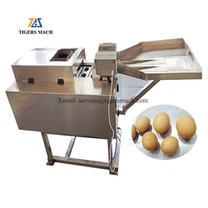
Peeling: The harvested roots are washed to remove dirt and debris, and then peeled to remove the outer skin. Peeling can be done manually or mechanically, using peeling machines.
Grinding:
Grinding: The peeled cassava roots are ground into a pulp. This can be done using hammer mills or disc mills. The grinding process breaks down the cell walls of the cassava root, releasing the starch granules.
Rinsing and Sieving:
Rinsing: The ground cassava pulp is mixed with water to form a slurry. This slurry is then rinsed to remove fiber and other impurities.
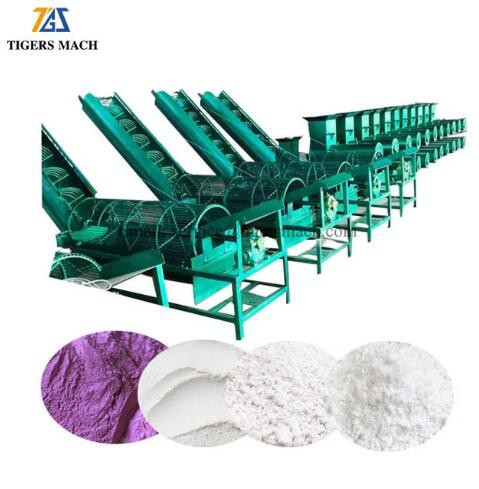
Sieving: The slurry is passed through a series of sieves to separate the starch granules from the fiber and other solid particles.
Sedimentation:
Settling: The starch-rich slurry is allowed to settle in sedimentation tanks. The heavier starch granules settle to the bottom, while the lighter fiber particles remain suspended in the water.
Decantation: The clear liquid, known as supernatant, is decanted from the settled starch.
Dewatering:
Centrifugation: The concentrated starch slurry is further dewatered using centrifuges. This removes excess water and produces a moist starch cake.
Drying: The moist starch cake is dried to reduce the moisture content. This can be done using various drying methods, such as sun drying, oven drying, or spray drying.
Milling and Sifting:
Milling: The dried starch is milled to obtain a fine powder.
Sifting: The milled starch is sifted to remove any coarse particles and impurities.
Packaging:
Packaging: The refined cassava starch is packaged in various sizes and forms, such as bags or bulk containers, for distribution and sale.
Key Factors Affecting Cassava Starch Quality:
Cassava Variety: The variety of cassava used can affect the starch yield and quality.
Harvesting Time: Harvesting at the right time can ensure optimal starch content and quality.
Processing Conditions: Factors like grinding temperature, pH, and drying conditions can influence the final product.
Equipment Maintenance: Proper maintenance of processing equipment is essential for efficient and high-quality production.
By carefully controlling these factors, it is possible to produce high-quality cassava starch that meets the needs of various industries.