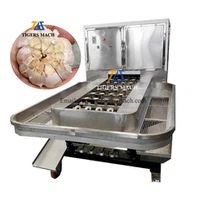
The cassava starch process line is a comprehensive series of steps and operations involved in transforming raw cassava roots into high-quality starch, a versatile and widely used product in various industries. This process encompasses several stages, each crucial for achieving optimal starch extraction and quality. Let's explore the cassava starch process line in detail:
1. Harvesting and Selection:
The process begins with the careful harvesting of mature cassava roots. Farmers select healthy and fully developed roots to ensure a high-quality starch output. The selection process is crucial, as the quality of the raw material directly impacts the final product.
2. Cleaning and Washing:
Once harvested, the cassava roots undergo thorough cleaning and washing to remove soil, debris, and any contaminants. This step is essential to guarantee a clean and pure starch extraction, minimizing impurities in the final product.
3. Peeling:
After cleaning, the cassava roots are peeled to remove the outer skin. Peeling is a critical step to eliminate any undesirable components and improve the overall quality of the starch.
4. Chipping:
The peeled cassava roots are then chipped into smaller pieces. This process facilitates the subsequent steps of starch extraction and ensures uniformity in size for efficient processing.

5. Crushing/Grating:
The chipped cassava undergoes crushing or grating to break down the cell walls and release the starch granules. This step is crucial for extracting the maximum amount of starch from the cassava cells.
6. Starch Extraction:
The crushed or grated cassava undergoes a separation process to extract the starch from the fibrous residue. Various methods, including sieving and washing, are employed to separate the starch from other components.
7. Sedimentation:
The extracted starch is then allowed to settle in tanks to separate it from water and impurities. This sedimentation process helps concentrate the starch and refine its purity.
8. Dewatering:
After sedimentation, the starch undergoes a dewatering process to remove excess water. This step is crucial for achieving the desired starch concentration and consistency.
9. Drying:
The dewatered starch is subjected to drying methods to reduce its moisture content. Common drying techniques include air drying, sun drying, or mechanical drying. Proper drying is essential to ensure the starch's stability, shelf life, and usability in various applications.
10. Sieving and Packaging:
The dried cassava starch undergoes sieving to achieve a uniform particle size. This final processing step ensures the starch meets specific quality standards. The sieved starch is then packaged for distribution to various industries, such as food, pharmaceuticals, and industrial applications.
The cassava starch process line demands precision and adherence to quality control measures at each stage. Continuous innovation and technological advancements have led to improvements in efficiency, yield, and sustainability within the cassava starch industry. Additionally, sustainable practices, waste reduction, and eco-friendly processing methods are becoming integral parts of modern cassava starch processing lines, reflecting a commitment to environmental responsibility.
The cassava starch process line is a sophisticated series of steps that transforms cassava roots into a valuable and versatile starch product. From harvesting and cleaning to extraction, drying, and packaging, each stage plays a crucial role in ensuring the quality and purity of the final cassava starch.