
Operating an egg roll forming machine effectively requires a comprehensive understanding of the machine's mechanisms, product quality standards, and safety protocols. These machines are typically used in food production environments to produce thin, uniformly shaped egg rolls or crepes.
Mastering the operation not only ensures high-quality output but also promotes safety, efficiency, and machine longevity. Below are the essential operating skills and practices every operator should develop.
1. Understanding the Machine Structure and Functions
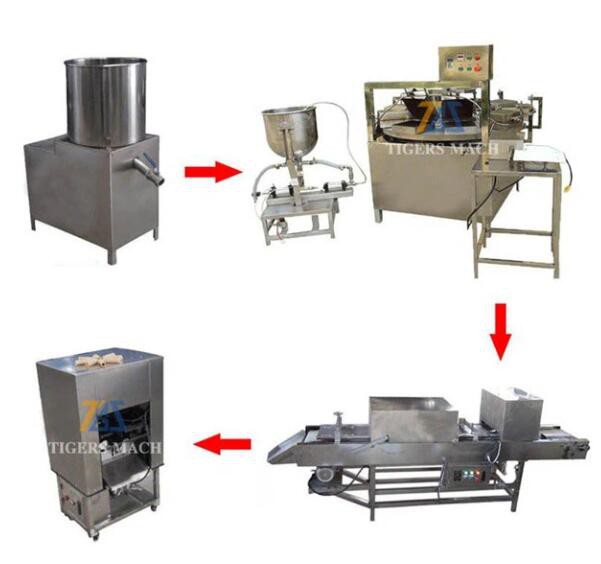
The first step in operating an egg roll forming machine is to become familiar with its structure and components. This includes knowing the functions of the batter hopper, baking plates, forming rollers, cutting blades, and control panel.
Operators must understand how each component contributes to the forming process and how to properly use the machine's interface for temperature control, speed regulation, and cycle settings. Basic mechanical knowledge is important for adjusting settings and recognizing abnormal machine behavior.
2. Batter Preparation and Feeding Skills
Proper batter preparation is crucial for the machine to produce consistent and high-quality egg rolls. The batter should be of the correct consistency to flow smoothly through the machine without clogging or dripping.
Operators should know how to mix the ingredients to achieve the desired texture and viscosity. When feeding the batter into the machine, even distribution is key to forming uniform sheets. Any deviation in batter consistency can result in malformed or burnt products.
3. Temperature and Time Control
The baking temperature and forming time must be accurately set and continuously monitored. Operators must know how to set and adjust these parameters according to the type of egg roll being produced.
Too high a temperature may cause the rolls to burn, while too low a temperature can result in undercooked or sticky products. Likewise, incorrect forming time can affect the product's texture and appearance. Skill in fine-tuning these variables is essential to maintaining product consistency throughout a production run.
4. Monitoring and Adjustments During Operation
During egg roll forming machine operation, constant monitoring is necessary to ensure optimal performance. Skilled operators can identify issues such as batter leakage, uneven cooking, or misalignment in the rolling mechanism.
They should be able to make real-time adjustments to speed, temperature, and batter volume as needed. Paying attention to sensory indicators, such as the smell, color, and texture of the egg rolls, can help in detecting problems early.
5. Routine Maintenance and Cleaning
Regular maintenance is essential for smooth machine operation and hygiene compliance. Operators must clean the egg roll forming machine's baking surfaces, rollers, and batter containers daily to prevent the buildup of food residue, which can affect taste and cause mechanical issues.
Lubricating moving parts and inspecting electrical components are also part of routine care. Familiarity with the cleaning process, including disassembly and reassembly if required, ensures that the machine remains in good working condition.
6. Troubleshooting and Problem-Solving
Operators should be trained to handle common issues such as paper sticking to the plates, inconsistent roll thickness, or machine jamming. The ability to quickly diagnose the problem and apply a solution minimizes downtime and material waste. Having a troubleshooting guide or checklist on hand can support less experienced operators in resolving issues more efficiently.


