Chili sauce processing requires six core steps: pre-treatment, grinding, seasoning, sterilization, filling, and packaging.
The chili sauce production line mainly uses food-grade stainless steel and can be configured with small single machines or automated production lines, depending on production capacity.
Core Production Equipment (in order of process)
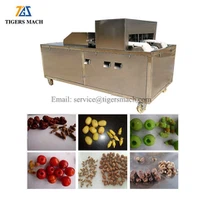
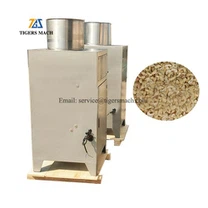
Pre-treatment equipment: Washing machine (bubble type/high-pressure spray) for removing dirt from chili peppers, a stem cutting machine to remove chili stems, and a crusher to cut chili peppers into 3-5cm pieces, improving subsequent grinding efficiency.
Grinding equipment: Colloid mill (core equipment) for achieving a fine texture, stone mill (optional for traditional processes) to preserve flavor, and some production lines include a homogenizer for further particle refinement.
Seasoning and mixing equipment: Mixing tank (with heating/insulation function) for mixing chili paste, salt, oil, spices, etc., ensuring even seasoning.
Sterilization equipment: Pasteurizer (low-temperature sterilization, preserving flavor) or high-temperature short-time sterilization machine (high efficiency, suitable for large-scale production) to prevent product spoilage.

Filling and packaging equipment: Filling machine (quantitative filling of glass bottles/plastic bottles), sealing machine (screw cap/press cap), labeling machine, and some including production date inkjet printers.
Auxiliary equipment: Raw material lifting machine, filter (to remove impurities), finished product storage tank, cleaning and disinfection equipment (meeting food hygiene standards).
Standard Process Flow
Raw material selection: Select chili peppers that are free from rot, mold, and have bright colors, removing impurities and substandard fruits.
Pre-treatment: After washing with a washing machine, the stems are removed with a stem cutting machine, and the chili peppers are cut into segments with a crusher. Blanching may be performed if necessary (depending on product requirements, some processes omit this step).
Grinding into paste: The crushed chili peppers are sent to a colloid mill, and the gap is adjusted to control the fineness (generally 80-120 mesh) to obtain a uniform chili paste.
Seasoning and mixing: The chili paste is transferred to a mixing tank, and edible oil, edible salt, white sugar, MSG, spices, etc., are added according to the recipe.
The mixture is heated and stirred until completely blended (temperature 50-70℃). Sterilization Treatment: After seasoning, the sauce is sent to a sterilizer for pasteurization (85-90℃, 15-20 minutes) or high-temperature short-time sterilization (121℃, 3-5 seconds). After sterilization, the temperature is rapidly reduced to below 40℃.
Filling and Sealing: In a sterile environment, a filling machine quantitatively injects the sauce into sterilized containers, and a sealing machine seals them to prevent secondary contamination.
Packaging and Inspection: After labeling and coding, defective products with leaks or impurities are removed through visual inspection. Finally, the products are boxed and stored in the warehouse.
Key Considerations:
Equipment Materials: All equipment in contact with food must be made of 304/316 stainless steel and comply with food hygiene standards.
Hygiene Control: Equipment is thoroughly cleaned and disinfected before and after production. The workshop maintains a sterile environment to prevent microbial contamination.
Texture Control: Particle size is adjusted by controlling the gap of the colloid mill, and parameters are adjusted according to the product positioning (coarse/fine).
Shelf Life: The thoroughness of sterilization and the tightness of packaging directly affect the shelf life. Generally, bottled chili sauce has a shelf life of 6-12 months.